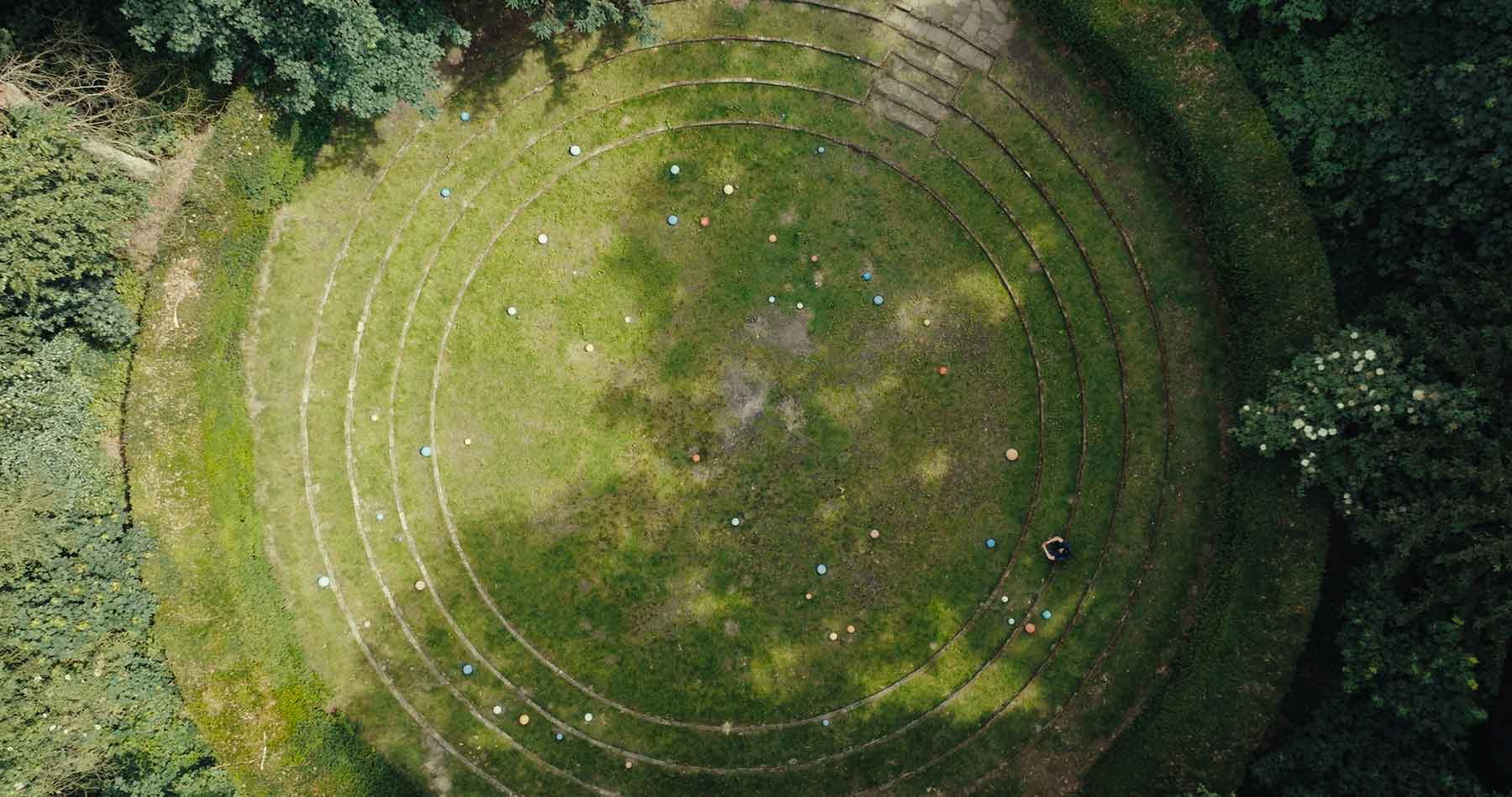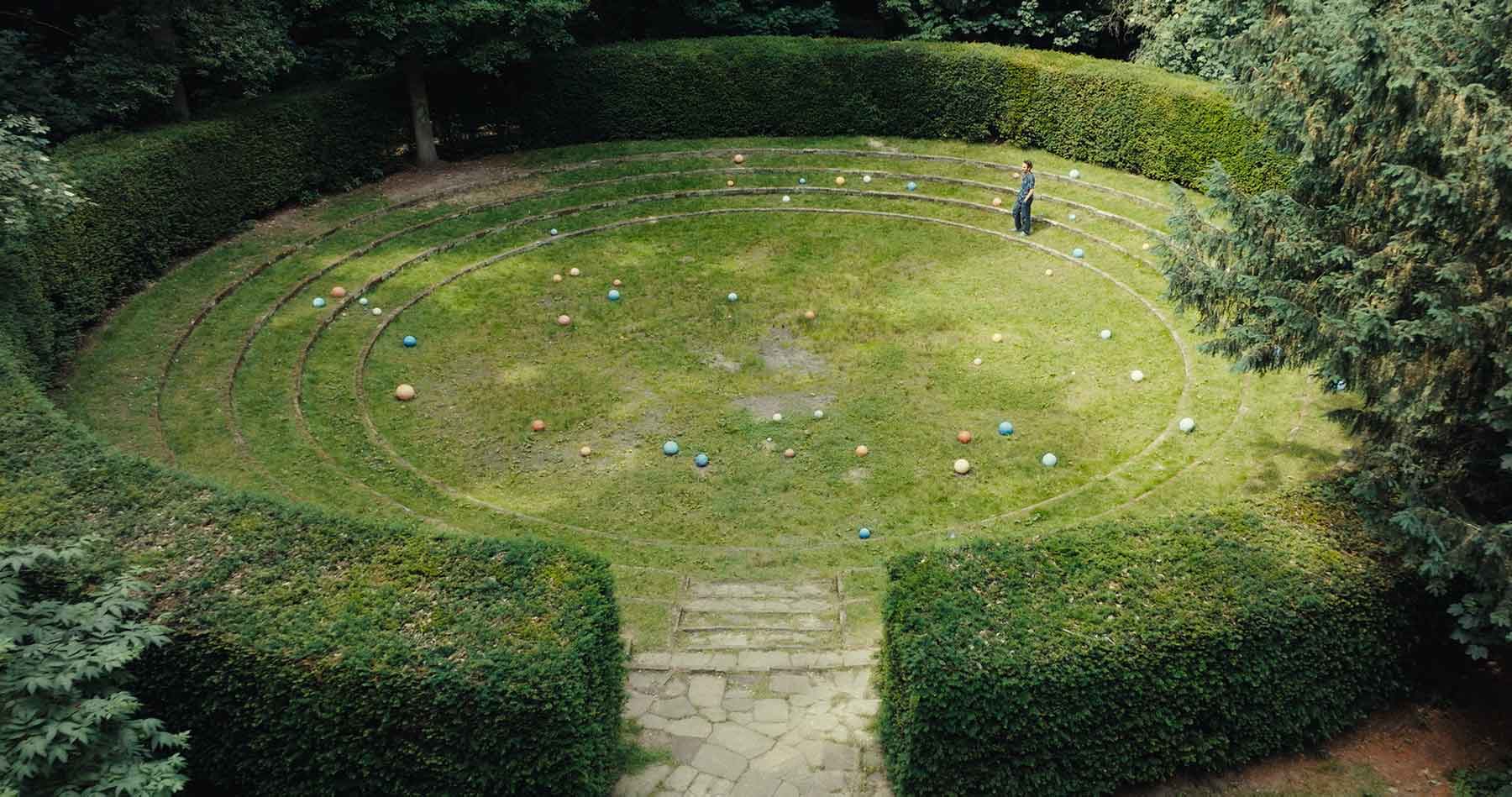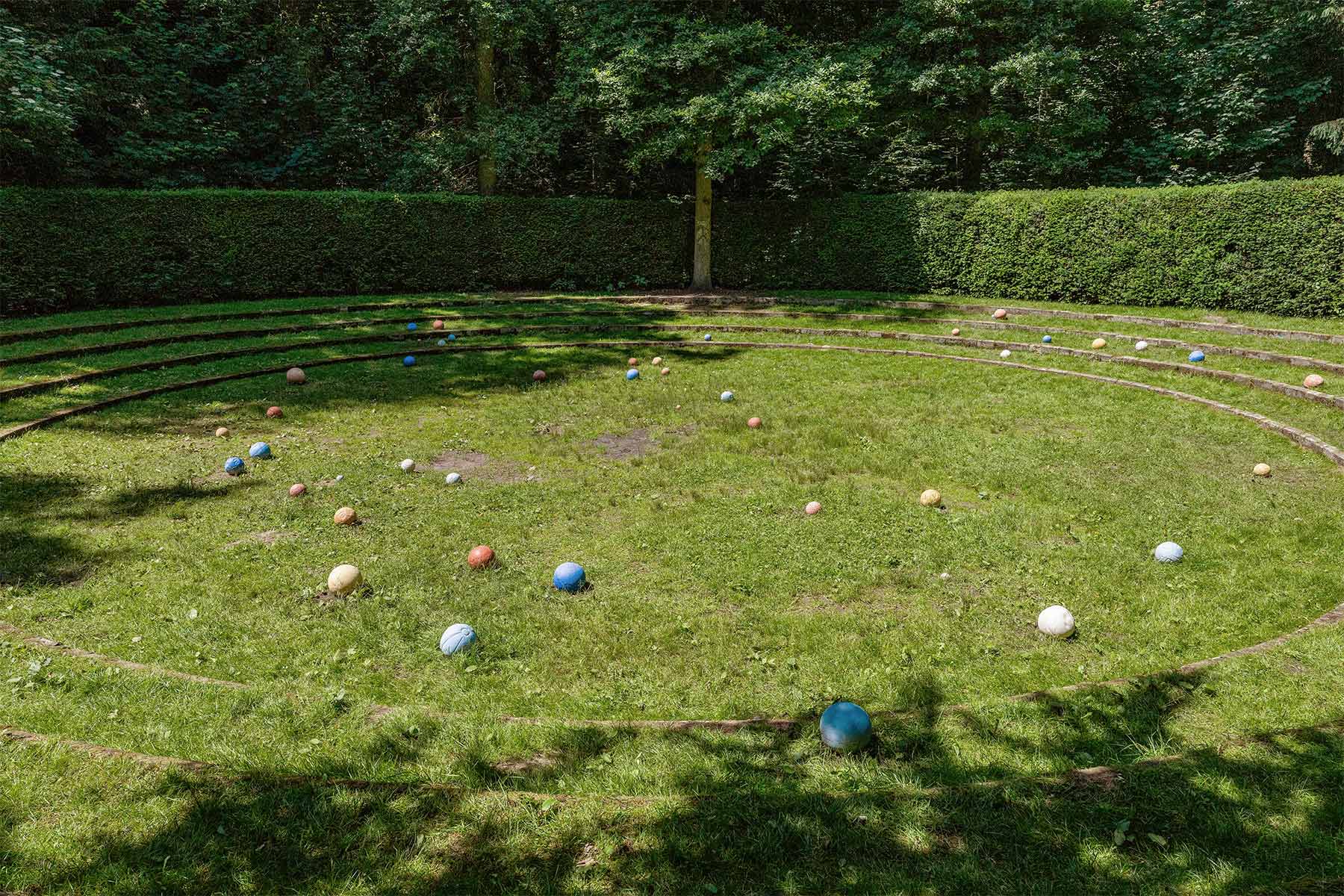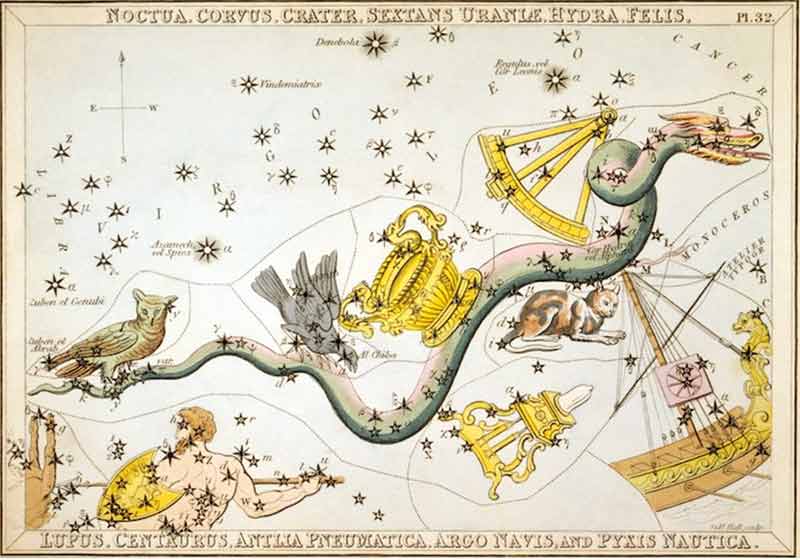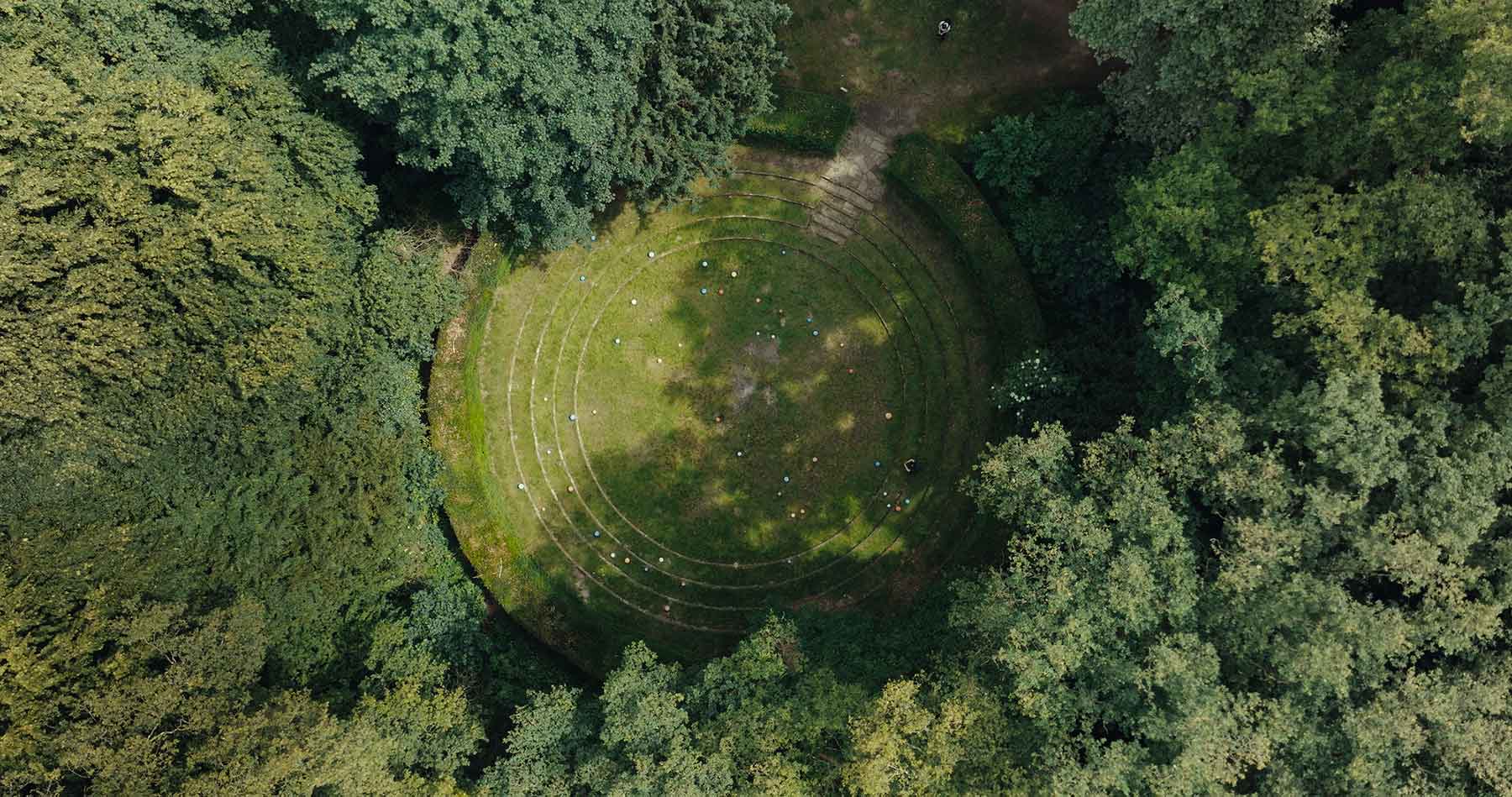
Hydra, the longest and largest of the 88 constellations, gradually disappears during summer over Hamburg’s night sky. The small amphitheater of the Hamburg Stadtpark hosts a theater of stars, in a form of colored concrete spheres, casts of used balls from a variety of games, which mirror Hydra’s position and its surrounding constellations in the sky.
As fossilized remains of contemporary society, they embody the social and cultural bonds formed through play and represent the scale of the galaxies in which these dynamics play out, connecting the cosmos to the commons.
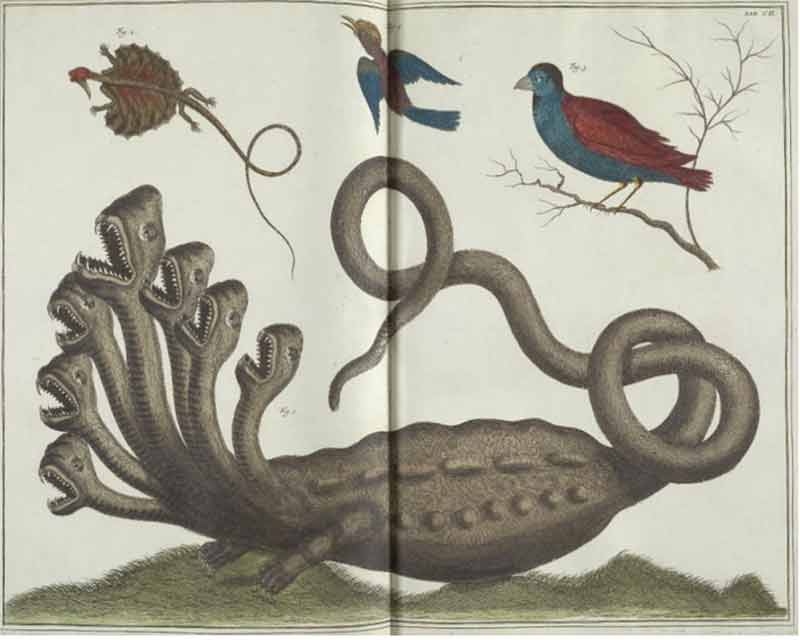
In mythology, Hydra is a nine headed water serpent or monster, of which one head is immortal. When a head is severed, two more heads will emerge, making the creature almost impossible to defeat. The heads symbolize struggle, resilience and regeneration, as well as the vices people are to overcome.
In its celestial form, however, Hydra is depicted with only one head, the immortal one. Here on the ground in Hamburg, it can also relate to the story of the so-called Hamburg Hydra.
In 1735, the city’s mayor put up for auction what was claimed to be the remains of a Hydra, an extraordinary find that had captured the imagination of the public, only for Swedish scientist Carl Linnaeus to reveal it as a forged specimen. The installation evokes this historical fakery and the contrasting quest for truth and fairplay within shifting personal, societal and cosmic narratives.
The colors of the concrete spheres relate to the Morgan-Keenan spectral classification system for stars according to the temperature and age of the star. The orange giant, Alphard, being the largest and brightest star in the Hydra constellation at 177 light-years away from Earth.
From the leaflet of the exhibition From the Cosmos to the Commons, curated by the city curator of Hamburg, Joanna Warsza.